What a Casino Venue Description Can Actually Tell You
A casino venue description can reveal practical visitor details beneath its polished language, helping you decide what to confirm before a visit.
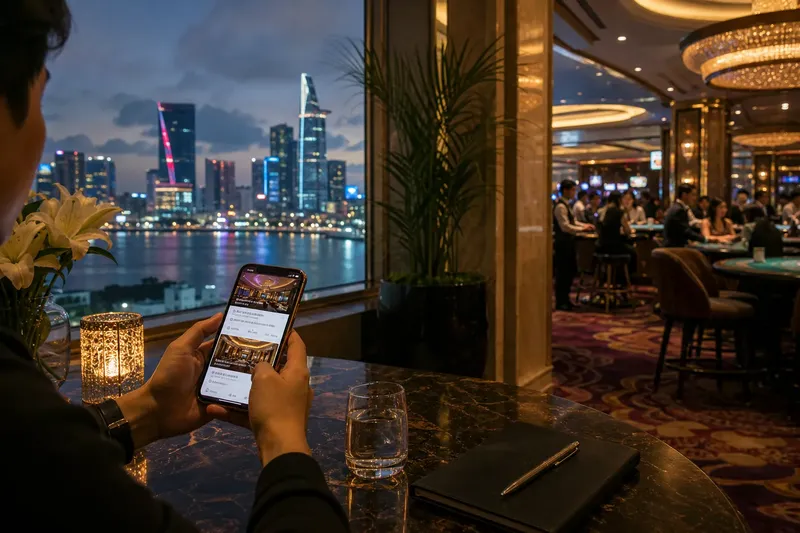
You are comparing two casino venues in Ho Chi Minh City on your phone, and one description promises a lively evening while the other names its location and services. A casino venue description is useful when you separate those concrete details from language designed mainly to set a mood.
Read the wording according to the decision you need to make. If you are choosing where to go, look for usable visitor information; if you are already on your way, confirm current arrangements through the venue’s official channels.
Details you can use
Concrete information identifies something a visitor could act on or verify. A street address, named entrance, opening hours, stated dress expectations, accepted identification, and listed facilities are more useful than adjectives such as “grand” or “exclusive”.
Notice how specific each claim is. “Near the city centre” gives a broad orientation, while a full address or a named building makes it possible to check the route. “Dining available” is less informative than a named restaurant with its own hours or booking details.
- Location: Is there a street address, building name, or clear landmark?
- Access: Does the description identify an entrance or explain how visitors reach the venue?
- Entry requirements: Does it state age, identification, registration, or dress expectations?
- Facilities: Are dining, lounges, gaming areas, or other services named specifically?
- Timing: Are opening hours or service hours given, and is it clear which they refer to?
Keep a simple rule in mind: a detail is actionable when it can change your plan or be checked before you leave.
Atmosphere without logistics
Words such as “vibrant”, “upscale”, “intimate”, and “world-class” describe the impression a venue hopes to create. They may help you picture the intended tone, but they do not establish how busy the room will be, what a visit costs, or which services are available at a particular time.
Some phrases sit between mood and fact. “Live entertainment” signals a type of offering, but without a schedule it does not tell you whether a performance is happening on your intended evening. “Private gaming” may describe the setting, yet it does not explain access conditions or whether advance arrangements are needed.
Do not treat promotional language as a promise of a particular experience. Use it to decide whether the venue’s style appeals to you, then look for separate, specific information about the practical conditions.
Choose by your situation
The most useful description depends on what you are trying to resolve. Match the wording to your immediate decision rather than expecting one promotional page to answer every question.
If you are choosing a venue?
Compare the location, named facilities, and the kind of atmosphere described. If the page offers only broad claims about luxury or excitement, treat those as a preview of tone, not enough information to settle practical questions.
If you are checking entry?
Look for stated age and identification requirements, registration arrangements, and any dress guidance. If the wording is absent or unclear, contact the venue before setting out rather than inferring the rules from photographs or promotional copy.
If you are planning an evening?
Separate the venue’s general opening hours from the hours of a restaurant, event, or other service. A description that names an offering but gives no schedule tells you what may exist, not what will be available during your visit.
If you need accessibility details?
Search for direct information about step-free access, lifts, seating, or other needs relevant to your visit. If the description says only that the venue is comfortable or modern, ask staff a specific question before travelling.
What remains uncertain
Even a detailed description can leave gaps. It may have been written for promotion rather than day-to-day visitor planning, and a listed facility may operate on different hours or conditions from the main venue.
Say you are considering a fictional venue called Lotus Room for an evening with a friend who needs step-free access. Its page gives a street address and mentions dining, but says nothing about accessible routes. You can use the address to check the location, but the missing access detail is a reason to contact the venue before choosing it; a clear answer would help you decide whether the visit fits your needs.
For details that can change, favour a current official page, a direct message, or a phone call over an old listing copied elsewhere. Ask one clear question at a time—for example, whether the entrance is step-free, or whether a named restaurant is open when you plan to arrive.
Where the right answer depends on the venue’s current rules, its published terms, or local requirements, check the relevant source rather than relying on general promotional wording.
Questions to check
Does “open daily” mean every facility is open?
Not necessarily. It may refer only to the main venue, while dining, entertainment, or other services keep separate hours.
Can promotional descriptions confirm entry requirements?
Only if they state the requirements clearly. For identification, age, registration, or dress expectations, seek an explicit current policy rather than guessing from the tone of the page.
What should I do when a detail is missing?
Decide whether it affects your visit, then ask the venue directly. A missing detail about atmosphere may not matter, while uncertainty about access or entry can change your plans.
Are guest reviews a substitute for venue information?
Reviews can offer impressions, but they may reflect a different date or visitor’s needs. Use them as context, and confirm essential arrangements with the venue itself.
Read for a decision
A casino venue description can help you compare a location, understand the intended atmosphere, and identify questions that need a direct answer. For a planned visit in Ho Chi Minh City, rely on named details for the choices they actually support, and treat broad mood-setting language as a description of style rather than logistics.
Before you leave, keep the specific detail that matters most to your situation in view: an address, an entry condition, an access answer, or a service schedule. That small distinction makes the description easier to use without asking it to promise more than it says.